

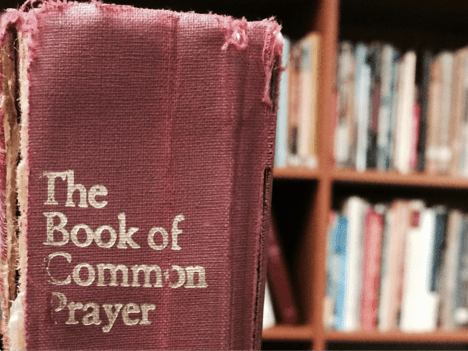
General Convention 2018 concluded with two signature compromises in the area of liturgy, B012 (the compromise on marriage) and A068 (memorialization of the 1979 BCP). These compromises made it possible for a diverse Church to move forward together and to continue to pursue adapting liturgies to the various needs and cultures of local mission fields. They also left the Church with a good bit of uncertainty and some work to do on Constitution and Canons in order to prepare for future revisions and to clarify the basic question, “What is the Book of Common Prayer?”
A068 in 2018 called for an examination of the Constitution and Canons to enable the church to be “adaptive in its engagement of future generations of Episcopalians, multiplying, connecting, and disseminating new liturgies for mission.” The new A059, which will come before the House of Deputies, is some of the fruit of the work called for by A068 in 2018. It is also the result of careful deliberation within the House of Bishops and with Committee 12.
The new A059 replaces both the proposed A059 and B011, which the House of Bishops initially adopted as a substitute by a very narrow margin (60 for; 57 against, 1 abstention). The close vote on B011 indicated to the bishops a significant division in the mind of the House, and so they took time to see if there might be space for a clarifying compromise. Good news! They found one for which they could vote unanimously: the new A059.
The new A059 seeks to do Constitutional work in the Constitution and canonical work in the canons. This was part of the struggle with the original A059 and B011; constitutional and canonical work were conflated in a way that confused even our bishops. The new A059 is based on an understanding that the Constitution is a vessel that provides boundaries for the canons, and that there is essential canonical work to come following the first reading of the new A059.
Section 1 is where the action is in this amendment. It seeks to say what the Prayer Book is.
The Prayer Book contains rites for both public and private devotion, as did the earliest versions of Cranmer’s book. The priority and necessity of the adaptation1 of liturgy is stated here: The Book of Common Prayer in this Church will be communal prayer enriched by our church’s cultural, geographical, and linguistic contexts. This statement reflects the current moment of the Church’s life together, but it finds its roots in the historical development of the first American Prayer Book following the Revolutionary War. “When independence from the mother country brought about the organization of a self-governing Church in the American states, it also dictated alterations to the English Prayer Book to fit the local conditions and circumstances. The revision was made first, as the Preface to the Prayer Book of 1789 put it, in respect ‘to those alterations in the Liturgy which became necessary in the prayers for our Civil Rulers,’ and then ‘to take a further review of the Public Service, and to establish such other alterations and amendments therein as might be deemed expedient.’”2 Furthermore, the commitment to adaptation of liturgy for local use has been important, albeit imperfectly accomplished, in the global mission movement of the church. This statement about the priority and necessity of adaptation of liturgy in terms of the nature of the Book has a companion statement in Section 4 that allows the Bishops of the Church to use their authority to provide for local adaptation in language and a recognition of cultural and linguistic differences.
Did you notice Trial Use is capitalized?
Part of the intent of the Constitution and Canons revision work envisioned in A068 is the clarification of what we mean by experimental use, trial use, etc, and which rites have been approved for which kind of usage. The capitalization of Trial Use is an effort to harmonize the Article of the Constitution with other instances.
There is more work to be done!
If we are going to keep the constitutional work in the Constitution and the canonical work in the Canons, then we have canonical work to do and need to be accountable to doing that work. The final Resolved makes a commitment to do this in a timely manner:
Resolved, That the General Convention direct the Standing Commission on Liturgy and Music
and the Standing Commission on Structure, Governance, Constitution, and Canons, to review
the Canons relevant to the implementation of this Article and propose revisions to the 81st
General Convention.
What could the timing of Constitution and Canons revision look like?
First Reading of A059: 2022
Second Reading of A059 and attendant canonical proposals: 2024
If A059 is sent back to committee, that pushes the timeline to 2027 for having the Constitution & Canons work done to prepare the Church for revision.
What sorts of canonical revisions might we be looking to make?
The group set up under the final Resolved will focus on Title I, Canon 1.1.2 (2) A Standing Commission on Liturgy and Music. A new version of the canon needs to make provision for the collection, curation, and clear categorization of liturgical resources (bringing clarity to experimental use, Trial Use, etc). Ideally, by 2024, we would have a clear understanding of what we have already done, i.e. which rites fall into which categories. The process for revision would be clear.
In the development of A059, the bishops and the members of Committee 12 had to have conversations acknowledging a number of different fears in the room, all of which felt urgent. There was the fear of our marriage equality work being lost somehow. There was also the fear of not having a “book book” or losing our sense of what common prayer means and the way the Book of Common Prayer gives us a foundational resource for our Church’s theology. There was anxiety about what a prayer book is and wondering about how we make space for what it is now and for where it may be going. There was a worry of ending up with a “book book” in the pews at some point that doesn’t match all of our own theological commitments, particularly around marriage, even if perhaps there is an online authorized set of texts that is a better match. There was a wrestling with the desire for flexibility in responding to context and our commitment to take our time in these traditioning processes and to see how they shape and are shaped by our life together. All of these fears and anxieties will also be present in the House of Deputies throughout the coming years and, as in 2018, this General Convention will end with uncertainty and open questions about how we will continue to do life together praying as a people of the Prayer Book. Don’t panic! As Bishop Lee once exclaimed with delight near the end of General Convention in 2018, “it turns out conciliarism works!” As the bishops have shown, we can do this difficult work together by listening through the fears and anxieties because we long to understand each other and to be one body, united by common prayer.
- The word “adaptation” is used here where a liturgist might use the word “enculturation.” Curiously, “enculturation” has opposite connotations for liturgists and sociologists or missiologists, so the author attempted to choose another word.
- Edwin Augustine White and Jackson A. Dykman, Annotated Constitution and Canons for the Government of the Protestant Episcopal Church in the United States of America Otherwise Known as the Episcopal Church: Adopted in General Conventions, 1789-1991, (Domestic and Foreign Missionary Society, 1981) vol. 1, Article X, 132.
 The Episcopal Herald